
Just remember.
Consider advertising on our site!
Also, if you need to search anything on Google, please use the bar below:
Showing posts with label World War II. Show all posts
Showing posts with label World War II. Show all posts
Wednesday, July 8, 2009


Monday, July 6, 2009
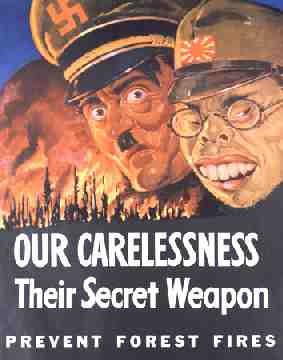
Just Remember....
 Consider advertising on our site!
Also, if you need to search anything on Google, please use the bar below:
Saturday, June 6, 2009
Remember D-Day
Give thanks today for all of the young men and women that gave their lives 65 years ago today. They gave up their short life to preserve the freedom of our nation and nations throughout the world. So many people today don't even know that D-Day is June 6, sadly many don't even understand what D-Day is.
It is so easy to coast through life without giving reverence to those who have fallen so long ago, so far away. But we cannot forget and we cannot relinquish the honor that so many veterans gave to our country.
It is impossible for any of us to truly comprehend what our brave World War II soldiers went through. But those who survive don't ask for understanding, or money, or even to be honored. They simply ask that we remember what they gave and what they lost.
So today, we must all remember the fallen. We must remember the sacrifices. We must remember D-Day.
Remember to bookmark our site!
Consider advertising on our site!
Also, if you need to search anything on Google, please use the bar below:
It is so easy to coast through life without giving reverence to those who have fallen so long ago, so far away. But we cannot forget and we cannot relinquish the honor that so many veterans gave to our country.
It is impossible for any of us to truly comprehend what our brave World War II soldiers went through. But those who survive don't ask for understanding, or money, or even to be honored. They simply ask that we remember what they gave and what they lost.
So today, we must all remember the fallen. We must remember the sacrifices. We must remember D-Day.
Remember to bookmark our site!
Consider advertising on our site!
Also, if you need to search anything on Google, please use the bar below:
Thursday, May 14, 2009
Quote of the Day
We shall have peace in our time!
-- Neville Chamberlain, 1938
Consider advertising on our site!
Also, if you need to search anything on Google, please use the bar below:
-- Neville Chamberlain, 1938
Consider advertising on our site!
Also, if you need to search anything on Google, please use the bar below:
Tuesday, May 12, 2009
Quote of the Day
I hold in my hand a promise from Chancellor Hitler....
-- Neville Chamberlain, 1938
Consider advertising on our site!
Also, if you need to search anything on Google, please use the bar below:
-- Neville Chamberlain, 1938
Consider advertising on our site!
Also, if you need to search anything on Google, please use the bar below:
Monday, May 11, 2009
Quote of the Day
I just want the Sudetenland, honest.
-- Adolf Hitler, ca. 1938
Consider advertising on our site!
Also, if you need to search anything on Google, please use the bar below:
-- Adolf Hitler, ca. 1938
Consider advertising on our site!
Also, if you need to search anything on Google, please use the bar below:
Friday, April 3, 2009
Serbia Fought Hitler in World War II
This is for Mr. K. This is about the Serbian people rising up to fight the Nazis.
Consider advertising on our site!
Also, if you need to search anything on Google, please use the bar below:
Consider advertising on our site!
Also, if you need to search anything on Google, please use the bar below:
Saturday, March 28, 2009
Churchill's Ice Carrier
One of the best kept secrets of the Second World War was an ambitious plan by the British government to build a massive aircraft carrier to battle the Axis-- made of ice.
The project, code-named Project Habakkuk, was conceived during the dark days of the War. Geoffrey Pyke, a British spy, conceived that since there were shortages in vital metals, aircraft carriers could be made of ice, using less energy and resources. Since ice melted too quickly, the idea would have been ditched except for the invention of Pykrete, which is an ice/wood pulp combination.
With Pykrete being able to withstand higher temperatures, the planning proceeded. The carriers would need a refrigeration unit and a complicated duct system on board. Still, it was considered feasible. Canada attempted to build a model, costing 700,000 Pounds and using 300,000 tons of wood pulp.
Later models placed the Habakkuk at over 2,000 feet long, with a 40 foot hull and a rudder over 100 feet tall. The crew would have had over 3,600 members. The massive carriers were not completed by the end of the war due to money issues, leaving one of the most fascinating and ambitious projects in world history uncompleted.
The History Channel has chronicled this, as well.
Sourcing: http://www.thewarillustrated.info/230/strange-story-of-hms-habbakuk.asp
Consider advertising on our site!
Also, if you need to search anything on Google, please use the bar below:
The project, code-named Project Habakkuk, was conceived during the dark days of the War. Geoffrey Pyke, a British spy, conceived that since there were shortages in vital metals, aircraft carriers could be made of ice, using less energy and resources. Since ice melted too quickly, the idea would have been ditched except for the invention of Pykrete, which is an ice/wood pulp combination.
With Pykrete being able to withstand higher temperatures, the planning proceeded. The carriers would need a refrigeration unit and a complicated duct system on board. Still, it was considered feasible. Canada attempted to build a model, costing 700,000 Pounds and using 300,000 tons of wood pulp.
Later models placed the Habakkuk at over 2,000 feet long, with a 40 foot hull and a rudder over 100 feet tall. The crew would have had over 3,600 members. The massive carriers were not completed by the end of the war due to money issues, leaving one of the most fascinating and ambitious projects in world history uncompleted.
The History Channel has chronicled this, as well.
Sourcing: http://www.thewarillustrated.info/230/strange-story-of-hms-habbakuk.asp
Consider advertising on our site!
Also, if you need to search anything on Google, please use the bar below:
Tuesday, January 27, 2009
Why I Own a Gun
I was reading a book about the Vichy Regime which ruled France between 1940-1944. The regime was an ally of Hitler and one of its worst crimes was helping in the extermination of the Jews. Below is one of the accounts of someone lucky enough to survive the Holocaust. Remember, one of Hitler's first acts was to take away the guns. So be thankful for your firearms and the right to have them.
In March or April, 1944, we got the dreaded notice that we had been selected for resettlement farther east. The train cars they took us in were actually cattle cars. We entered the cars and sat on our baggage. There was not very much room between us and the roof of the cattle car. Our car had from 80 to 100 people in it so it was quite crowded. We were sifting tight on tight. We had some water and some food but no comfort whatsoever. The cars were sealed. We could not open them from the inside. The w indows were small, open rectangles. Perhaps we could have jumped off the train and run into the countryside, but we did not know ff anyone on the outside would help us. We thought most civilians would probably turn us in. We could not speak the Czech lang uage. It seemed better to go along with the SS and do what they wanted. By that time the war had been going on four or five years. We thought the end might be in sight and we would be liberated.
Our train left the ghetto at six o'clock in the evening. At night as we traveled, we heard gun shots. We did not know why these shots were fired. After the war, I learned the SS troops were on the roofs of the cattle cars shooting past the windows todiscourage people from sticking their heads out. The train was moving at a fairly great speed. We did not know what country we were going through. There was no stopping.
At four o'clock the next afternoon, we arrived in Auschwitz (Ow- Switch) in Poland. When the train stopped, we again thought of trying to escape. But we knew that in Germany most Germans would turn us over to the local authorities for a reward of money or food. We had no way of knowing ff the Poles would be any differe nt. Someone would have to hide us or bring us food. We had no money to pay for our keep. So in the end, to keep our family together, we dropped any plans of attempting to escape.
The doors of the cattle car were yanked opened. The first thing we heard was shouts of, "Out, as soon as you can, out. Your belongings you leave therel" Despite this we grabbed what we could and assembled outside. Before us stood an immense rectangleof land surrounded by electrically-charged barbed wire. This was the Auschwitz death camp.
Subscribe to:
Posts (Atom)

