Wednesday, June 23, 2010
Interview With Jim Best, Author of Tempest at Dawn
Sunday, June 20, 2010
Interview With Mike Cullen, the Author of "Whiny Little Bitch"
Bookmark our site!
Consider advertising on our site!
Wednesday, June 16, 2010
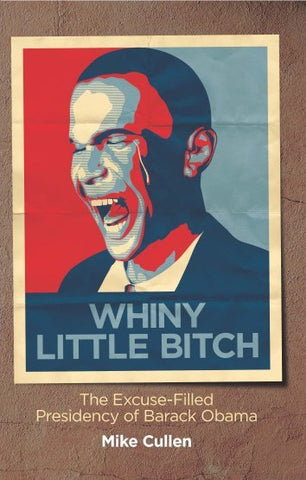
Book Review: Whiny Little Bitch: The Excuse-Filled Presidency of the Barack Obama
Instead I found a compelling, concise look at the first eighteen months of the Presidency of Barack Obama. Author Mike Cullen broke down the discussion by topic, including foreign policy, the stimulus, banking reform, and others. Each chapter is filled with authentic quotes from the chief executive and his Cabinet as well as the news stories that we wish we could forget from 2008 and 2009.
Some excerpts:
What about the economy? Obama's stimulus plan had no prayer of creating jobs and he was smart enough to know it. But an $800 billion plan that makes no sense as economic stimulus can make perfect sense as a vote-buying scheme.
and
With Obama, the truth is always flexible. There's one version for the CNN audience and another for the ACORN activists. He needs one group to like him and the other to work for him.
Cullen has put together a relatively thorough but still terse look at the administration of the 44th President. Look for it at Quite Right Books and stock up-- let your friends and family know and it'd make a good gift for July 4th, birthdays, Bar Mitzvahs, and Christmas.
Bookmark our site!
Consider advertising on our site!
Wednesday, June 2, 2010
The 5 books all Conservatives should read. PART 2.
(5) - Samuel Adams: A Life - Ira Stoll.
(4) - Conservative Victory - Sean Hannity.
(3) - Washington: The Indispensable Man - James Flexner.
(2) - America Alone: The End of The World - Mark Steyn.
(1) - The Birth of the United States - Jim Bishop.
It's true that most of my reading concerns the American Revolution, Modern Conservatism, and just a dash of fiction (Don't Ask, Don't Tell is my fiction reading policy), however, Sean Hannity's latest masterpiece is a must read for all those concerned about November, and for those who are worried about the future of the Western world; please purchase Mark Steyn's exceptional book.
Thoughts? Did I miss any exceptional books?
Bookmark our site!
Consider advertising on our site!
Tuesday, November 24, 2009
'Going Rogue' Book Review
Sarah Palin, Harper Collins, 2009
Jim Haroldson
I was very eager to get Governor Palin's book. I'd been waiting for it for months and to see that it was coming to my local Barnes and Noble made me quiver with joy. Unfortunately, Utica NY wasn't on Sarah's book tour (at least not yet) so I had to deal with just the book and no autograph (yet).
I spent the next couple of days cloistered in my room, coming down only to eat and to go to work. My wife must have thought that the book contained some revealing pictures of Sarah (lol!).
The book starts out forcefully, with Sarah telling us how the United States is still the greatest country in the world and how we must make sure to retain this status through the pure form of conservatism. She talks about when she was governor of Alaska and how the principles she utilized while governing could transform the US into the dynamic superpower it was when Ronald Reagan was president.
Just like the great Reagan, she taps into American patriotism. She hammers out the greatness of the former president:
Ronald Wilson Reagan, once a member of the US armed forces and Hollywood star, was able to transform American politics with the principles of conservatism.... Despite his divorce, union involvement, and his first wife's abortion, he redirected his principles back to supporting the family.I read on, tantalized at the future of America if Sarah is elected in 2012. She talks about her early childhood and how a stable family life helped make her into the woman she is.
Sarah was really racking up the points. She knew what to say and how to say it. There's no way that Ms. Palin won't win in 2012. She talked about America's "glory period" during the 1940s and 1950s.
My father worked long hours, but always made sure to come home and tell us how important we were to him. A good mother and a good father can solve many of society's ills.
There were no divisive issues of the day. We all had a job to do-- defeat the Nazis, and we rallied around the flag and got things done, just like our ancestors. There was no argument, just get your gun, or shovel, or tractor, and get to work. After the war, the soldiers had to come home to hear complaints about imperfections in American society. We were closer then to a perfect society than we are now, thank you very much!Sarah showed that America really knew what it was doing back then-- that we had our eyes on the prize.
And one of the last topics Sarah tackles is the Obamanation Administration. She talks about it after her discussion about the 2008 campaign:
What we have here is a President that is turning our great nation towards Socialism... The same Socialism which has failed repeatedly in Europe and Canada. We have a President unable or unwilling to serve as a competent Commander in Chief. We have a President who has no plan for the economy. We have a President who many doubt was born in this country. We need change, all right, real American change. We need a man (or woman) capable of turning this nation towards free-market liberty and not to the cliff.Overall, this book was a joy to read. Sarah's voice boomed out at me and her writing style was in a method that I understood. She really laid down the case for conservatism-- the case for American destiny. PALIN 2012!!!
BUY THE BOOK: http://www.amazon.com/Going-Rogue-American-Sarah-Palin/dp/0061939897/ref=sr_1_1?ie=UTF8&s=books&qid=1259125667&sr=8-1
Bookmark our site!
Consider advertising on our site!
Saturday, July 11, 2009
Catch-22 Summary
The development of the novel can be split into multiple segments. The first (chapters 1-12) broadly follows the story fragmented between characters, but in a single chronological time in 1943. The second (chapters 12-20) flashes back to focus primarily on the "Great Big Siege of Bologna" before once again jumping to the chronologal "present" of 1943 in the third part (chapter 20-25). The fourth (chapters 25-28) flashes back to the origins and growth of Milo’s syndicate, with the fifth part (chapter 28-32) returning again to the narrative "present" but keeping to the same tone of the previous four. In the sixth and final part (chapter 32 on) while remaining in the "present" time the novel takes a much darker turn and spends the remaining chapters focusing on the serious and brutal nature of war and life in general. [3]
While the previous five parts develop the novel in the present and by use of flash-backs, it is in chapters 32-41 of the sixth and final part where the novel significantly darkens. Previously the reader had been cushioned from experiencing the full horror of events, but now the events are laid bare, allowing the full effect to take place. The horror begins with the attack on the undefended Italian mountain village, with the following chapters involving despair (Doc Daneeka and the Chaplain), disappearance in combat (Orr and Clevinger), disappearance caused by the army (Dunbar) or death (Nately, McWatt, Kid Sampson, Dobbs, Chief White Halfoat and Hungry Joe) of most of Yossarian’s friends, culminating in the unspeakable horrors of Chapter 39, in particular the rape and murder of Michaela, who represents pure innocence.[3]
From Wikipedia.
Consider advertising on our site!
Also, if you need to search anything on Google, please use the bar below:
Wednesday, April 29, 2009
Animal Farm Summary
The short novel is dystopian allegory in which animals play the roles of the Bolshevik revolutionaries[4] and overthrow and oust the human owner of a farm (Manor Farm), renaming it Animal Farm and setting it up as a commune in which, at first, all animals are equal; however, class and status disparities soon emerge between the different animal species (the pigs being the "greater species"). The novel describes how a society's ideologies can be manipulated and twisted by those in positions of social and political power, including how Utopian society is made impossible by the corrupting nature of the very power necessary to create it. Throughout the novel Orwell shows that no matter how equal a society starts the smarter, richer, or more powerful person (or animal in this case) will come out on top. As the story says, "All animals are equal, but some animals are more equal than others".
The novel addresses not only the corruption of the revolution by its leaders but also how wickedness, indifference, ignorance, greed and myopia destroy any possibility of an Utopia. While this novel portrays poor leadership as the flaw in revolution (and not the act of revolution itself), it also shows how ignorance and indifference to problems within a revolution allow the horrors to happen.
From Wikipedia.Consider advertising on our site!
Also, if you need to search anything on Google, please use the bar below:
Tuesday, April 28, 2009
Hamlet Summary
The protagonist of Hamlet is Prince Hamlet of Denmark, son of the recently deceased King Hamlet and his wife, Queen Gertrude. After the death of the King, his brother Claudius proclaims himself King and hastily marries Gertrude. In the background is Denmark's long-standing feud with neighbouring Norway, and an invasion, led by the Norwegian prince Fortinbras, is expected.
The play opens on a cold winter night at Elsinore, the Danish royal castle. Francisco, one of the sentinels, is relieved of his watch by Bernardo, another sentinel, and exits while Bernardo remains. A third sentinel, Marcellus, enters with Horatio, the best friend of Hamlet, Prince of Denmark. The sentinels try to persuade Horatio that they have seen King Hamlet's ghost, when it appears again. After hearing from Horatio of the Ghost's appearance, Hamlet resolves to see the Ghost himself. That night, the Ghost appears again. He tells Hamlet that he is the spirit of his father and discloses that Claudius murdered King Hamlet by pouring poison in his ears. The Ghost demands that Hamlet avenge him; Hamlet agrees and decides to fake madness to avert suspicion. He is, however, uncertain of the Ghost's reliability.
Busy with affairs of state, Claudius and Gertrude try to avert an invasion by Prince Fortinbras of Norway. Perturbed by Hamlet's continuing deep mourning for his father and his increasingly erratic behaviour, they send two student friends of his—Rosencrantz and Guildenstern—to discover the cause of Hamlet's changed behaviour. Hamlet greets his friends warmly but quickly discerns that they have been sent to spy on him.
Polonius is Claudius's trusted chief counsellor; his son, Laertes, is returning to France, and his daughter, Ophelia, is courted by Hamlet. Neither Polonius nor Laertes thinks Hamlet is serious about Ophelia, and they both warn her off. Shortly afterwards, Ophelia is alarmed by Hamlet's strange behaviour and reports to her father that Hamlet rushed into her room but stared at her and said nothing. Polonius assumes that the "ecstasy of love"[7] is responsible for Hamlet's madness, and he informs Claudius and Gertrude. Together, Claudius and Polonius set up Ophelia to spy on him. When she returns his letters and he silently guesses what is going on, he furiously rants at her, and insists she go "to a nunnery".[8]
Hamlet remains unconvinced that the Ghost has told him the truth, but the arrival of a troupe of actors at Elsinore presents him with a solution. He will stage a play, re-enacting his father's murder, and determine Claudius's guilt or innocence by studying his reaction. The court assembles to watch the play; Hamlet provides an agitated running commentary throughout. When the murder scene is presented, Claudius abruptly rises and leaves the room, which Hamlet sees as proof of his uncle's guilt. Claudius, fearing for his life, banishes Hamlet to England on a pretext, closely watched by Rosencrantz and Guildenstern. Alone, Claudius discloses to the audience that he is sending Hamlet to his death.
Gertrude summons Hamlet to her closet to demand an explanation. On his way, Hamlet passes Claudius in prayer but hesitates to kill him, reasoning that death in prayer would send him to heaven. In the bedchamber, an argument erupts between Hamlet and Gertrude. Polonius, who is spying on the whole scene behind an arras, panics when it seems as if Hamlet is about to murder the Queen and cries out for help. Hamlet, believing it is Claudius hiding behind the arras, stabs wildly, killing Polonius. When he realizes that he has killed Ophelia's father, he is remorseful. The Ghost appears, urging Hamlet to treat Gertrude gently but reminding him to kill Claudius. Unable to see or hear the Ghost herself, Gertrude takes Hamlet's conversation with it as further evidence of madness. Prior to embarking for England, Hamlet hides Polonius's body, ultimately revealing its location to the King and Gertrude.
Demented by grief at Polonius's death, Ophelia wanders Elsinore singing bawdy songs. Her brother, Laertes, arrives back from France, enraged by his father's death and his sister's madness. She comes onstage briefly to give out herbs and flowers. Claudius convinces Laertes that Hamlet is solely responsible; then news arrives that Hamlet is still at large—his ship was attacked by pirates on the way to England, and he has returned to Denmark. Claudius swiftly concocts a plot. He proposes a fencing match between Laertes and Hamlet in which Laertes will fight with a poison-tipped sword, but tacitly plans to offer Hamlet poisoned wine if that fails. Gertrude interrupts to report that Ophelia has drowned.
We next see two gravediggers discuss Ophelia's apparent suicide, while digging her grave. Hamlet arrives with Horatio and banters with a gravedigger, who unearths the skull of a jester from Hamlet's childhood, Yorick. Ophelia's funeral procession approaches, led by Laertes; he leaps into the grave, cursing Hamlet as the cause of her death. Hamlet professes his own love and grief for Ophelia, and he and Laertes grapple, but the brawl is broken up.
Back at Elsinore, Hamlet tells Horatio how he escaped and that Rosencrantz and Guildenstern have been sent to their deaths. A courtier, Osric, interrupts to invite Hamlet to fence with Laertes. With Fortinbras's army closing on Elsinore, the match begins. Laertes pierces Hamlet with a poisoned blade; in the ensuing scuffle, Hamlet takes the sword and fatally wounds Laertes. Gertrude drinks the poisoned wine and dies. In his dying moments, Laertes is reconciled with Hamlet and reveals Claudius's murderous plot. In his own last moments, Hamlet manages to kill Claudius and names Fortinbras as his heir. When Fortinbras arrives, Horatio recounts the tale and Fortinbras orders Hamlet's body borne off in honour.
Consider advertising on our site!
Also, if you need to search anything on Google, please use the bar below:
Monday, April 27, 2009
A Tale of Two Cities Summary
Book the First: Recalled to Life
| “ | It was the best of times, it was the worst of times... | ” |
| —Opening line of A Tale of Two Cities[1] | ||
It is 1775. Jarvis Lorry, an employee of Tellson's Bank, is traveling from England to France to bring Dr. Alexandre Manette to London. At Dover, before crossing to France, he meets seventeen-year-old Lucie Manette and reveals to her that her father, Dr. Manette, is not really dead (as she had been told) but has been a prisoner in the Bastille for the last 18 years.
Lorry and Lucie travel to Saint Antoine, a suburb of Paris, where they meet the Defarges. Monsieur Ernest and Madame Therese Defarge own a wine shop. They also (secretly) lead a band of revolutionaries, who refer to each other by the codename "Jacques" (drawn from the name of an actual French revolutionary group, the Jacquerie).
Monsieur Defarge (who was Dr. Manette's servant before Manette's imprisonment, and now has care of him) takes them to see Dr. Manette. Manette has withdrawn from reality due to the horror of his imprisonment. He sits in a dark room all day making shoes, a trade he had learned whilst imprisoned. At first he does not know his daughter, but eventually recognizes her through her long golden hair like her mother's. Her eyes are blue also just like his. Lorry and Lucie take him back to England.
Book the Second: The Golden Thread
It is now 1780. French emigrant Charles Darnay is being tried at the Old Bailey for treason. Two British spies, John Barsad and Roger Cly, are trying to frame the innocent Darnay for their own gain. They claim that Darnay, a Frenchman, gave information about British troops in North America to the French. Darnay is acquitted when a witness who claims he would be able to recognise Darnay anywhere is unable to tell Darnay apart from one of the barristers defending Darnay, Sydney Carton, who just happens to look almost identical to him.
In Paris, the Marquis St. Evrémonde (Monseigneur), Darnay's uncle, runs over and kills the son of the peasant Gaspard; he throws a coin to Gaspard to compensate him for his loss. Monsieur Defarge comforts Gaspard, and Monseigneur tosses Defarge a coin. As the Marquis's coach drives off, Defarge throws the coin back into the coach, enraging the Marquis.
Arriving at his château, the Marquis meets with his nephew: Charles Darnay. (Darnay's real surname, therefore, is Evrémonde; out of disgust with his family, Darnay has adopted a version of his mother's maiden name, D'Aulnais.[2]) They argue: Darnay has sympathy for the peasantry, but the Marquis is cruel and heartless:
"Repression is the only lasting philosophy. The dark deference of fear and slavery, my friend," observed the Marquis, "will keep the dogs obedient to the whip, as long as this roof," looking up to it, "shuts out the sky."[3]
That night, Gaspard (who has followed the Marquis to his château, hanging under his coach) murders the Marquis in his sleep. He leaves a note saying, "Drive him fast to his grave. This, from JACQUES."[4]
In London, Darnay gets Dr. Manette's permission to woo Lucie. But Carton confesses his love to Lucie as well. Knowing she will not love him in return, Carton promises to "embrace any sacrifice for you and for those dear to you".[5]
On the morning of the marriage, Darnay, at Dr. Manette's request, reveals who his family is, a detail which Dr. Manette had asked him to withhold until then. This unhinges Dr. Manette, who reverts to his obsessive shoemaking. His sanity is restored before Lucie returns from her honeymoon; to prevent a further relapse, Lorry destroys the shoemaking bench, which Dr. Manette had brought with him from Paris.
It is July 14, 1789. The Defarges help to lead the storming of the Bastille. Defarge enters Dr. Manette's former cell, "One Hundred and Five, North Tower".[6] The reader does not know what Monsieur Defarge is searching for until Book 3, Chapter 9. (It is a statement in which Dr. Manette explains why he was imprisoned.)
In the summer of 1792, a letter reaches Tellson's bank. Mr. Lorry, who is planning to go to Paris to save the French branch of Tellson's, announces that the letter is addressed to Evrémonde. The letter turns out to be from Gabelle, a servant of the former Marquis. Gabelle has been imprisoned, and begs the new Marquis to come to his aid. Darnay, who feels guilty, leaves for Paris to help Gabelle without disclosing his true identity.
Book the Third: The Track of a Storm
In France, Darnay is denounced for emigrating from France, and imprisoned in La Force Prison in Paris.[7] Dr. Manette and Lucie—along with Miss Pross, Jerry Cruncher, and "Little Lucie", the daughter of Charles and Lucie Darnay—come to Paris and meet Mr. Lorry to try to free Darnay. A year and three months pass, and Darnay is finally tried.
Dr. Manette, who is seen as a hero for his imprisonment in the hated Bastille, is able to get him released. But that very same evening Darnay is again arrested, and is put on trial again the next day, under new charges brought by the Defarges and one "unnamed other". We soon discover that this other is Dr. Manette, through the testimony of his statement (his own account of his impisonment, written shortly after he was taken to the Bastille); Manette does not know that his statement has been found, and is horrified when his words are used to condemn Darnay.
On an errand, Miss Pross is amazed to see her long-lost brother, Solomon Pross, but Pross does not want to be recognised. Sydney Carton suddenly appears (stepping forward from the shadows much as he had done after Darnay's first trial in London) and identifies Solomon Pross as John Barsad, one of the men who tried to frame Darnay for treason at his first trial in London. Carton threatens to reveal Solomon's identity as a Briton and an opportunist who spies for the French or the British as it suits him. If this were revealed, Solomon would surely be executed, so Carton's hand is strong.
Darnay is confronted at the tribunal by Monsieur Defarge, who identifies Darnay as the Marquis St. Evrémonde and reads the letter Dr. Manette had hidden in his cell in the Bastille. Defarge can identify Darnay as Evrémonde because Barsad told him Darnay's identity when Barsad was fishing for information at the Defarges' wine shop in Book 2, Chapter 16. The letter describes how Dr. Manette was locked away in the Bastille by the deceased Marquis Evrémonde (Darnay's father) and his twin brother (who held the title of Marquis when we met him earlier in the book, and is the Marquis who was killed by Gaspard; Darnay's uncle) for trying to report their crimes against a peasant family. The younger brother had become infatuated with a girl. He had kidnapped and raped her and killed her husband, brother, and father. Prior to his death, the brother of the raped peasant had hidden the last member of the family, his younger sister, "somewhere safe". The paper concludes by condemning the Evrémondes, "them and their descendants, to the last of their race".[8] Dr. Manette is horrified, but his protests are ignored—he is not allowed to take back his condemnation. Darnay is sent to the Conciergerie and sentenced to be guillotined the next day.
Carton wanders into the Defarges' wine shop, where he overhears Madame Defarge talking about her plans to have the rest of Darnay's family (Lucie and "Little Lucie") condemned. Carton discovers that Madame Defarge was the surviving sister of the peasant family savaged by the Evrémondes. The only plot detail that might give one any sympathy for Madame Defarge is the loss of her family and that she has no (family) name. "Defarge" is her married name, and Dr. Manette is unable to learn her family name though he asks her dying sister for it. See Dickens 2003, p. 340 (Book 3, Chapter 10). The next morning, when Dr. Manette returns shattered after having spent the previous night in numerous failed attempts to save Charles' life, he reverts to his obsessive shoemaking. Carton urges Lorry to flee Paris with Lucie, her father and "Little Lucie".
That same morning Carton visits Darnay in prison. Carton drugs Darnay, and Barsad (whom Carton is blackmailing) has Darnay carried out of the prison. Carton—who looks so similar to Darnay that a witness at Darnay's trial in England could not tell them apart—has decided to pretend to be Darnay, and to be executed in his place. He does this out of love for Lucie, recalling his earlier promise to her. Following Carton's earlier instructions, Darnay's family and Lorry flee Paris and France with an unconscious man in their coach who carries Carton's identification papers, but is actually Darnay.
Meanwhile Madame Defarge, armed with a pistol, goes to the residence of Lucie's family, hoping to catch them mourning for Darnay (since it was illegal to sympathise with or mourn for an enemy of the Republic); however, Lucie, her child, Dr. Manette and Mr. Lorry are already gone. To give them time to escape, Miss Pross confronts Madame Defarge and they struggle. In the fight, Madame Defarge's pistol goes off, killing her; the noise of the shot and the shock of Madame Defarge's death cause Miss Pross to go permanently deaf.
The novel concludes with the guillotining of Sydney Carton. Carton's unspoken last thoughts are "prophetic"[9] (that is, they come to pass): Carton foresees that many of the revolutionaries, including Defarge and Barsad, will be sent to the guillotine themselves, and that Darnay and Lucie will have a son whom they will name after Carton: a son who will fulfil all the promise that Carton wasted. Lucie and Darnay have a first son earlier in the book who is born and dies within a single paragraph. It seems likely that this first son appears in the novel so that their later son, named after Carton, can represent another way in which Carton restores Lucie and Darnay through his sacrifice. Dickens 2003, p. 219 (Book 2, Chapter 21)
| “ | It is a far, far better thing that I do, than I have ever done; it is a far, far better rest that I go to, than I have ever known. | ” |
| —Final sentence of A Tale of Two Cities[10] | ||
From Wikipedia
Consider advertising on our site!
Also, if you need to search anything on Google, please use the bar below:
Thursday, April 23, 2009
Their Eyes Were Watching God Summary
The main character, an African American woman in her early forties named Janie Crawford, tells the story of her life and journey via an extended flashback to her best friend, Pheoby, so that Pheoby can tell Janie's story to the nosy community on her behalf. Her life has three major periods corresponding to her marriages to three very different men.
Nanny, Janie's grandmother, was a slave who became pregnant by her master and gave birth to a daughter, Leafy. Though Nanny tries to create a good life for her daughter, Leafy is raped by her school teacher and she becomes pregnant with Janie. Shortly after Janie's birth, Leafy begins to drink and stay out at night. Eventually, she runs away leaving Janie with Nanny. Nanny transfers all the hopes she had for Leafy to Janie. When Janie is sixteen, Nanny sees her kissing a neighborhood boy, Johnny Taylor, and fears that Janie will become a "mule" to some man, so she arranges for Janie to marry Logan Killicks, an older man and farmer who is looking for a wife to keep his home and help on the farm. Janie has the idea that marriage must involve love, forged in a pivotal early scene where she sees bees pollinating a pear tree, and believes that marriage is the human equivalent to this natural process. Logan Killicks, however, wants a domestic helper rather than a lover or partner, and after he tries to force her to help him with the hard labor of the farm, Janie runs off with the glib Jody (Joe) Starks, who takes her to Eatonville.
Starks arrives in Eatonville (the United States's first all-black community) to find the residents devoid of ambition, so he arranges to buy more land from the neighboring landowner, hires some local residents to build a general store for him to own and run, and has himself appointed mayor. Janie soon realizes that Joe wants her as a trophy wife. He wants the image of his perfect wife to reinforce his powerful position in town, as he asks her to run the store but forbids her from participating in the substantial social life that occurs on the store's front porch.
After Starks passes away, Janie finds herself financially independent and beset with suitors, some of whom are men of some means or have prestigious occupations, but she falls in love with a drifter and gambler named Vergible Woods who goes by the name of Tea Cake throughout the story. She falls in love with Tea Cake after he plays the harmonica for her. She sells the store and the two head to Jacksonville and get married, only to move to the Everglades region soon after for Tea Cake to find work planting and harvesting beans. While their relationship has its ups and downs, including mutual bouts of jealousy, Janie now has the marriage with love that she had wanted.
The area is hit by the great Okeechobee hurricane, and while Tea Cake and Janie survive it, Tea Cake is bitten by a rabid dog while saving Janie from drowning. He contracts the disease himself. He ultimately tries to shoot Janie with his pistol, but she shoots him with a rifle in self-defense. She is charged with murder. At the trial, Tea Cake's black, male friends show up to oppose her, while a group of local white women arrive to support her. The all-white jury acquits Janie, and she gives Tea Cake a lavish funeral. Tea Cake's friends forgive her, and they want her to remain in the Everglades. However, she decides to return to Eatonville, only to find the residents gossiping about her.
From Wikipedia.Consider advertising on our site!
Also, if you need to search anything on Google, please use the bar below:
Wednesday, April 22, 2009
Classic Books: 1984 Summary
Ministry of Truth bureaucrat Winston Smith is the protagonist; although unitary, the story is three-fold. The first describes the world of 1984 as he perceives it; the second is his illicit romance with Julia and his intellectual rebellion against the Party; the third is his capture and imprisonment, interrogation, torture, and re-education in the Ministry of Love.
The intellectual Winston Smith is a member of the Outer Party who lives in the ruins of London and grew up in the post-World War II United Kingdom during the revolution and the civil war. As his parents disappeared in the civil war, the English Socialism Movement ("Ingsoc" in Newspeak) put him in an orphanage for training and employment in the Outer Party. His squalid existence consists of living in a one-room apartment, eating a subsistence diet of black bread and synthetic meals washed down with Victory-brand gin. He is discontented, and keeps an ill-advised journal of dissenting, negative thoughts and opinions about the Party. If the journal or Winston's errant behavior were to be discovered, it would result in his torture and execution at the hands of the Thought Police. However, he is blessed with having a small alcove beside his telescreen where he cannot be seen, where he can keep his own private secrets.
In his journal he explains thoughtcrime: "Thoughtcrime does not entail death. Thoughtcrime IS death." The Thought Police have two-way telescreens (in the living quarters of every Party member and in every public area), hidden microphones, and anonymous informers to spy potential thought-criminals who might endanger The Party. Children are indoctrinated to informing; to spy and report suspected thought-criminals — especially their parents.
Winston Smith is a bureaucrat in the Records Department of the Ministry of Truth, revising historical records to match The Party's contemporaneous, official version of the past. The revisionism is required so that the past reflects the shifts of the day in the Party's orthodoxy. Smith's job is perpetual; he re-writes the official record, re-touches official photographs, deleting people officially rendered as "unpersons". The original or older document is dropped into a "memory hole" chute leading to an incinerator. Although he likes his work, especially the intellectual challenge of revising a complete historical record, he also is fascinated by the true past, and eagerly tries to learn more about that forbidden truth.
One day, after helping a woman who fell over on the street up, she surreptitiously hands him a note. She is "Julia," a dark-haired mechanic who repairs the Ministry of Truth's novel-writing machines. Before that day, he had felt deep loathing for her, based on his assumptions that she was a brainwashed, fanatically devoted member of the Party; particularly annoying to him is her red sash of renouncement of and scorn for sexual intercourse. His preconceptions vanish on reading a handwritten note she gives him, which states "I love you." After that, they begin a clandestine romantic relationship, first meeting in the countryside and at a ruined belfry, then regularly in a rented room atop an antiques shop in the city's proletarian neighbourhood. The shop owner chats with Smith, discussing facts about the pre-revolutionary past, sells him period artifacts, and rents him the room to meet Julia. The lovers believe their hiding place paradisaical (the shop keeper having told them it has no telescreen) and think themselves alone and safe.
As their romance deepens, Winston's views change, and he questions Ingsoc. Unknown to him, the Thought Police have been spying on him and Julia. Later, when approached by Inner Party member O'Brien, Winston believes that he has come into contact with the Brotherhood who are opponents of the Party. O'Brien gives him a copy of "the book", The Theory and Practice of Oligarchical Collectivism, a searing criticism of Ingsoc said to be written by the dissident Emmanuel Goldstein, the leader of the Brotherhood. This book explains the perpetual war and exposes the truth behind the Party's slogan, "War is Peace; Freedom is Slavery; Ignorance is Strength."
The Thought Police later capture Winston and Julia in their sanctuary bedroom and they are separately interrogated at the Ministry of Love, where the regime's opponents are tortured and killed, but sometimes released (to be executed at a later date). Charrington, the shop keeper who rented them the room, reveals himself to be an officer of the Thought Police. After a prolonged regimen of systematic beatings by prison guards and psychologically draining interrogations by Party loyalists, Winston is subjected to electroshock torture by O'Brien, who tells Winston it will "cure" him of his "insanity", which O'Brien claims undeniably manifests itself in the form of Winston's hatred for the Party. During a long and complex dialogue, O'Brien reveals, in what is the most important line in the book, that the motivation of the Inner Party is not to achieve a future paradise but to retain power, which has become an end in itself. He outlines a terrifying vision of how they will change society and people in order to achieve this, including the abolition of the family, the orgasm, and the sex instinct, with the ultimate goal of eliminating anything that may come between one's love of Big Brother and Ingsoc. It will be a society that grows more, not less merciless as it refines itself, and a society without art, literature, or science, so that there are no distractions from their devotion to the Party, or any unorthodox thought, which is also meant to be achieved through the eventual eradication of Modern English, or "Oldspeak". During a session, O'Brien explains that the purpose of the ordeal at the Ministry of Love is to alter Winston's way of thinking, not to extract a confession, and that once Winston unquestioningly accepts reality as the Party describes it, he will be executed.
One night, as Winston lies dreaming in his cell, he suddenly wakes, yelling: "Julia! Julia! Julia, my love! Julia!", whereupon O'Brien rushes in and doesn't question him, and then sends him to Room 101, the most feared room in the Ministry of Love. Here a person's greatest fear is forced upon him or her for the final re-education step: acceptance. Winston, who has a primal fear of rats, is shown a wire cage filled with starving rats and told that it will be fitted over his head like a mask, so that when the cage door is opened, the rats will bore into his face until it is stripped to the bone. Just as the cage brushes his cheek, he shouts frantically: "Do it to Julia!" The torture ends and Winston is returned to society, brainwashed to accept Party doctrine. During the brainwashing, it is noted that O'Brien somehow was always aware of what Smith was thinking and in a way was reading his mind. It can be interpreted as either the Thought Police had devised a mechanism of reading people's thoughts or O'Brien understood Smith completely and was able to predict his chain of thought perfectly.
After his release, Winston encounters Julia in the park. With distaste, they remember the unauthorized and unorthodox ("ungood" in Newspeak) feelings they once shared for each other and acknowledge having betrayed each other. They are apathetic about their reunion and each other's experiences. Winston, happily reconciled to his impending execution, and accepting the Party's depiction of life, celebrates the false fact of a news bulletin reporting Oceania's recent, decisive victory over Eurasia. It is at this moment that he sincerely loves Big Brother for the very first time — a metaphorical bullet entering his brain. Thus the book ends on a bitter note, with Winston Smith's inner transformation finally complete. Not resolved is whether Winston is ever actually executed, or whether his mental capitulation is considered enough.
From Wikipedia.Consider advertising on our site!
Also, if you need to search anything on Google, please use the bar below:
Tuesday, April 21, 2009
Lord of the Flies Summary
The story itself takes place on an isolated island. A plane has crashed (though this plane is never mentioned nor seen again for the rest of the story), and it transpires that there are no adult survivors. Two English boys, the fair-haired Ralph and an overweight, bespectacled boy named "Piggy", form the initial focus, as they begin to make sense of their new surroundings. The boys soon find a white conch shell and Piggy suggests that Ralph use the conch as a horn to call for any other survivors who might be nearby. Ralph, thus, initiates the island's first assembly where all of the survivors are revealed to be male children, none seemingly over the age of thirteen: "biguns" (a few older boys) and "littluns" (several younger boys).
The survivors rapidly side with one of two dominant boys: Ralph, and another older boy named Jack Merridew (the head of a choir group that also landed on the island, presumably in the same plane crash). A brief election is held among the children and Ralph is voted chief (losing only the votes of Jack's loyal fellow choirboys) and he calls everyone together to work toward two common goals, the first being to have fun and the second to be rescued by creating a constant fire signal, to be lit using Piggy's glasses. For a time the boys work together towards building shelters, gathering food and water, and keeping the fire going. The choirboys then create their own goal, to become the hunters of the local animals.
Jack, a bony, freckled redhead, becomes an immediate threat to Ralph's leadership, obviously envious of Ralph's ascent to chief, and empowers himself instead by becoming the unanimous leader of the hunters. Together, Ralph, Jack, and a black-haired boy named Simon, become the supreme trio among the children, going on a short expedition to confirm that they are indeed on an island. Piggy, the most sensible of the bunch, is quickly outcast by his fellow biguns and becomes an unwilling source of laughter for the other children. Ralph, in addition to leading the project of building shelters, feels an instinctive need to protect the littluns.
Many of the littluns have begun believing that the island is inhabited by a monster, quickly referred to by all as "the beast," that fills their nightmares. When those responsible for maintaining the smoke signal seem to be preoccupied with their worry towards the beast, Ralph calls an assembly to debunk rumours of such a monster once and for all. The assembly, however, turns into something of a riot and Jack gains control of the discussion by boldly promising to kill the beast, again challenging Ralph's authority as chief. Later, Ralph contemplates abdicating his position, though Piggy discourages him from doing so while the two of them and Simon wish hopefully for some guidance from the adult world.
Identical twins Sam and Eric (often referred to collectively as "Samneric") are in charge of the signal fire that night, though they fall asleep. When they awake, they find the corpse and open parachute of a fighter pilot who has landed on the island, believing it to be the beast and reporting it during the next assembly. In an expedition to find such a beast, Ralph and Jack come upon a cavernous part of the island that they name Castle Rock. Ralph and Jack together find the dead pilot on top of the mountain and also fearfully mistake it to be the sleeping beast. Jack blows the conch to call another assembly, confirming the beast's existence to the others. The assembly results in a schism, splitting the children into two groups. Ralph's group continues holding the belief that preserving the signal fire is the necessary focus. Jack becomes the chief of his own tribe, focusing on hunting while exploiting the belief in the beast. Jack and the hunters, having killed their first pig, gain defectors from Ralph's group by promising them meat, fun, and, most importantly, protection from the beast. Jack's tribe gradually becomes more animalistic, applying face paint from coloured clay discovered by Sam and Eric. To Ralph, these painted faces represent the hunters' masking their more civilised selves in order to liberate their inner "savages."
Simon, a part of Ralph's tribe, finds the head of the hunters' dead pig on a stick, left as an offering to the beast. Simon then undergoes a peculiar experience, presumably a hallucination, in which he sees the pig head, swarming with scavenging flies, as the "Lord of the Flies," and believes that it is talking to him, identifying itself as the real "Beast". It tells him the truth about itself - that the boys themselves "created" the beast, and that the real beast was inside him and inside them all. He also finds the dead parachuter which had been mistaken for the beast, and is the only one of the group to recognise that it is a cadaver rather than a sleeping monster. Simon eventually arrives at the peak of a tribal ritual at Jack's tribe, pursued by the ravenous flies, and tries to explain the truth about the beast and the dead man on the mountain. However, Jack's tribe, raging with bloodlust from their first kill, attack and murder Simon, believing him to be the beast in the shadows. Ralph, who took part in the murder along with Piggy, though both indirectly, feels intense remorse.
The savages then raid Ralph's camp, attacking the non-hunters in order to steal Piggy's glasses for making a cooking fire. By this time, Ralph's tribe consists of just himself, Piggy, and Sam and Eric. They all go to the rock fort of Jack's tribe at Castle Rock to try to get back Piggy's glasses so that he can see. In the ensuing confrontation, the dark boy Roger triggers a rock ambush in which Piggy is struck by a boulder and thrown off the edge of the cliff to his horrific death. Simultaneously, the conch is shattered. Eric and Sam are captured and tortured by Roger to become part of Jack's tribe. Ralph is forced to flee for his own safety, now completely alone.
The following morning, in the final sequence of the book, Jack and Roger lead their tribe on a manhunt for Ralph, intending to kill him. Ralph has secretly told Sam and Eric (believing them still loyal to him) where he will hide. The twins, however, are forced to betray Ralph's position, though he escapes with his life in many close calls as the savages tear apart the island to find him. Jack, now nearly complete in his demonic role as the ultimate savage, sets the entire island ablaze. Ralph skillfully evades capture on multiple occasions but soon is so stricken by terror and exhaustion from running that he gives up, expecting to be found and killed. However, the fire started by Jack is so large that it has attracted the attention of a nearby warship.
A navy officer lands on the island near where Ralph is lying, and his sudden appearance brings the children's fighting to an abrupt halt. Upon learning of the boys' activities, the officer remarks that he would have expected better from British boys, believing them only to be playing a game, unaware of the two murders that have taken place and the imminent occurrence of a third. In the final scene, although now certain that he will be rescued after all, Ralph cries, in mourning for his friend Piggy, his own loss of innocence, and his newfound awareness of the darkness of human nature.
From Wikipedia.Consider advertising on our site!
Also, if you need to search anything on Google, please use the bar below:
Friday, April 3, 2009
Tom Sawyer Summary
An imaginative and mischievous boy named Tom Sawyer lives with his Aunt Polly and his half-brother, Sid, in the Mississippi River town of St. Petersburg, Missouri. After playing hooky from school on Friday and dirtying his clothes in a fight, Tom is made to whitewash the fence as punishment on Saturday. At first, Tom is disappointed by having to forfeit his day off. However, he soon cleverly persuades his friends to trade him small treasures for the privilege of doing his work. He trades these treasures for tickets given out in Sunday school for memorizing Bible verses and uses the tickets to claim a Bible as a prize. He loses much of his glory, however, when, in response to a question to show off his knowledge, he incorrectly answers that the first two disciples were David and Goliath.
Tom falls in love with Becky Thatcher, a new girl in town, and persuades her to get “engaged” to him. Their romance collapses when she learns that Tom has been engaged before—to a girl named Amy Lawrence. Shortly after being shunned by Becky, Tom accompanies Huckleberry Finn, the son of the town drunk, to the graveyard at night to try out a “cure” for warts. At the graveyard, they witness the murder of young Dr. Robinson by the Native American “half-breed” Injun Joe. Scared, Tom and Huck run away and swear a blood oath not to tell anyone what they have seen. Injun Joe blames his companion, Muff Potter, a hapless drunk, for the crime. Potter is wrongfully arrested, and Tom's anxiety and guilt begin to grow.
Tom, Huck and their friend Joe Harper run away to an island to become pirates. While frolicking around and enjoying their new found freedom, the boys become aware that the community is sounding the river for their bodies. Tom sneaks back home one night to observe the commotion. After a brief moment of remorse at the suffering of his loved ones, Tom is struck by the idea of appearing at his funeral and surprising everyone. He persuades Joe and Huck to do the same. Their return is met with great rejoicing, and they become the envy and admiration of all their friends.
Back in school, Tom gets himself back in Becky's favor after he nobly accepts the blame for a book that she has torn. Soon Muff Potter's trial begins, and Tom, overcome by guilt, testifies against Injun Joe. Potter is acquitted, but Injun Joe flees the courtroom through a window.
Summer arrives, and Tom and Huck go hunting for buried treasure in a haunted house. After venturing upstairs they hear a noise below. Peering through holes in the floor, they see Injun Joe enter the house disguised as a deaf and mute Spaniard. He and his companion, an unkempt man, plan to bury some stolen treasure of their own. From their hiding spot, Tom and Huck wriggle with delight at the prospect of digging it up. By an amazing coincidence, Injun Joe and his partner find a buried box of gold themselves. When they see Tom and Huck's tools, they become suspicious that someone is sharing their hiding place and carry the gold off instead of reburying it.
Huck begins to shadow Injun Joe every night, watching for an opportunity to nab the gold. Meanwhile, Tom goes on a picnic to McDougal's Cave with Becky and their classmates. That same night, Huck sees Injun Joe and his partner making off with a box. He follows and overhears their plans to attack the Widow Douglas, a kind resident of St. Petersburg. By running to fetch help, Huck forestalls the violence and becomes an anonymous hero.
Tom and Becky get lost in the cave, and their absence is not discovered until the following morning. The men of the town begin to search for them, but to no avail. Tom and Becky run out of food and candles and begin to weaken. The horror of the situation increases when Tom, looking for a way out of the cave, happens upon Injun Joe, who is using the cave as a hideout. Eventually, just as the searchers are giving up, Tom finds a way out. The town celebrates, and Becky's father, Judge Thatcher, locks up the cave. Injun Joe, trapped inside, starves to death.
A week later, Tom takes Huck to the cave and they find the box of gold, the proceeds of which are invested for them. The Widow Douglas adopts Huck, and, when Huck attempts to escape civilized life, Tom promises him that if he returns to the widow, he can join Tom's robber band. Reluctantly, Huck agrees.
From Wikipedia.
Consider advertising on our site!
Also, if you need to search anything on Google, please use the bar below:
Thursday, April 2, 2009
Democracy in America Summary
The primary focus of Democracy in America is an analysis of why republican representative democracy has succeeded in the United States while failing in so many other places. He seeks to apply the functional aspects of democracy in America to what he sees as the failings of democracy in his native France.
Tocqueville speculates on the future of democracy in the United States, discussing possible threats to democracy and possible dangers of democracy. These include his belief that democracy has a tendency to degenerate into "soft despotism" as well as the risk of developing a tyranny of the majority. He observed that the strong role religion played in the United States was due to its separation from the government, a separation all parties found agreeable. He contrasts this to France where there was what he perceived to be an unhealthy antagonism between democrats and the religious, which he relates to the connection between church and state.
Insightful analysis of political society was supplemented in the second volume by description of civil society as a sphere of private and civilian affairs[1].
Importance
Democracy in America was published in numerous editions in the 19th century. It was immediately popular in both Europe and the United States. By the twentieth century, it had become a classic work of political science, social science, and history. It is a commonly assigned reading for undergraduates of U.S.A. universities majoring in the political or social sciences.
Tocqueville's work is often acclaimed for making a number of predictions which were eventually borne out. Tocqueville correctly anticipates the potential of the debate over the abolition of slavery to tear apart the United States (as it indeed did in the American Civil War). On the other hand, he predicts that any part of the Union would be able to declare independence. He also predicts the rise of the United States and Russia as rival superpowers (which they did become after World War II with Russia as the central component of the Soviet Union.)
American democracy was seen to have its potential downside: the despotism of public opinion, the tyranny of majority, conformity for the purpose of seeking material security, the absence of intellectual freedom which he saw to degrade administration and bring statesmanship, learning, and literature to the level of the lowest. Democracy in America predicted the violence of party spirit and the judgment of the wise subordinated to the prejudices of the ignorant.
From Wikipedia.Consider advertising on our site!
Also, if you need to search anything on Google, please use the bar below: