Showing posts with label France. Show all posts

Tuesday, March 23, 2010

Even France Backing Off a Carbon Tax

The BBC is reporting that even France is backing off of the idea of a carbon tax, coming after the near-collapse of cap-and-trade proposals in the US Congress.

There are some particularly interesting parts of the articles, admitting that it would be a burden and that it would damage the economy:

Prime Minister Francois Fillon told parliament that the government should focus on policies that increased France's economic competitiveness.

France had been rethinking the tax after a court rejected it last year.

The Constitutional Council said there were too many exemptions for polluters in the tax plan, and that a minority of consumers would bear the burden.

Wow. Even France is catching on.

Bookmark our site!
Subscribe
Bookmark and Share
Consider advertising on our site!

Tuesday, May 26, 2009

Interesting: Church of Scientology Could be Banned from France Because of "Organized Fraud"

This is a very interesting story from Yahoo! News about the Church of Scientology possibly being banned in France because they think it is a religious fraud:

PARIS (AFP) – The Church of Scientology and six of its French leaders went on trial on Monday on charges of organised fraud that could lead to an outright ban on the organisation in France.

Known for its Hollywood celebrity followers Tom Cruise and John Travolta, the group is in the dock in Paris for the second time in six years, although French courts have prosecuted several individual Scientologists since 1978.

The court is hearing a complaint from two women, one of whom alleges she was manipulated into handing over 20,000 euros (28,000 dollars) for costly Scientology products, such as an "electrometer" to measure mental energy.

She says she was approached in a Paris street by a Scientologist in late 1998 who offered a free personality test, at a time when she was feeling psychologically fragile.

After being told that her test results were poor, the woman was sold a series of life-improvement courses, vitamins and other products that she could ill afford, landing her in debt.

The second complainant alleges she was forced by her Scientologist employer to undergo testing and enroll in courses in 1998. When she resisted, she was fired.

Originally, there were four complainants, but two have since withdrawn.

The plaintiffs' lawyers argue that Scientology resorts to harassment and pressure to rein in victims who show signs of vulnerability.

The Scientology Celebrity Centre in Paris, its director Alain Rosenberg and five other top officials are accused of preying on fragile followers "with the goal of seizing their fortune by exerting a psychological hold."

Although seven people were charged, one defendant has since died.

The group's spokeswoman in France rejected the accusations, insisting that Scientology was a legitimate religion whose members faced persecution.

"This is a trial for heresy," said Daniele Gounord, adding that the Church was being "hounded" in French courts because it advocated new ideas.

The court's presiding judge Sophie-Helene Chateau insisted that "it is not up to the courts to decide on an issue of society," referring to the movement's status in France, where officials treat it as a sect.

Some of the Scientologists are also charged with illegally supplying pharmaceutical products after plaintiffs said they were given vitamins and concoctions to improve their mental state.

If convicted of organised fraud as a group, the defendants face a maximum sentence of seven years in jail and a fine of one million euros (1.4 million dollars).

Should French prosecutors win a conviction, the movement's French structures, the Scientology Celebrity Centre and an associated bookshop in Paris, could be shut down for failing to meet their responsibilities as legal entities.

However, even if the court rules in favour of the plaintiffs and decides to impose a ban, the Church of Scientology has the right to appeal and the legal wrangling could continue for years.

Founded in the United States in 1954 by science-fiction writer L. Ron Hubbard, the Church of Scientology is officially recognised as a religion there for tax purposes.

Politicians in some European countries including France, Germany, Greece and Russia have accused the movement of exploiting its members financially.

There are believed to be several thousand Scientology followers in France -- the movement claims 45,000 among a worldwide membership of 12 million -- but the state does not recognise it as a religion.

The trial is scheduled to continue until June 17 and a ruling is not expected until some time later.

Now, although Scientology is widely considered by people a freaky religion in the United States (and this blogger is one of them), what does this say about the freedom of religion in France? Seriously, though it is weird, any religion cannot be banned so long as it isn't violent or breaks the law. Scientology, therefore, cannot be banned here in the United States. So, France, is freedom of religion being swept away, or is your potential banishment of Scientology justified? I suppose we shall see.

Remember to bookmark our site!
Consider advertising on our site!
Also, if you need to search anything on Google, please use the bar below:

Thursday, May 21, 2009

Obama to Apologize for American "War Crimes" During WWII

DRESDEN, GERMANY
Derek Seizer
Deutsche Welle
21/5/2009

In a move aimed at healing the rifts of American foreign policy decisions, President Obama will make a trip to Europe next month, including a trip to Dresden, Germany. The trip will consist of several stops and the President will meet with the President of France and the Chancellor of Germany. Also slated are several policy speeches.

Perhaps the most controversial is a planned speech in which President Obama will formally apologize for American 'war crimes' during the Second World War. This would be particularly comforting to Europeans, who have long condemned American foreign policy actions, especially regarding civilians.

This speech will also be welcome in Germany, who had over 12,000,000 of its citizens killed during the war. Mayor Johann Krupp of Augensburg in Saxony stated to DW that the speech will "help my great-uncle's soul rest. He burned to death during the Dresden bombings."

Along with the Dresden fire-bombings, which German historians calculate killed 300,000 civilians, Obama will discuss other American actions. These include mistreatment of French civilians during the June 1944 invasion, including the killing of over 3,000 Milice members. In February 1945, the bridge over the Rhine River was bombed by an American B-29, killing over 300 fleeing refugees.

What is not clear is broader American 'war crimes' will be spoken of. These include accusations of anti-German sentiment during the war and placing Japanese-Americans into 'concentration camps', in which UC Berkeley professor Harold Beffer, PhD, estimated that 30,000 died.

Obama's speech will take place on June 6, the 65th anniversary of American, British, and Canadian landings in Normandy, France. He will speak briefly in Berlin before making his keynote address in Dresden.


Remember to bookmark our site!
Consider advertising on our site!
Also, if you need to search anything on Google, please use the bar below:

Tuesday, May 12, 2009

France goes too far.

I am 100% against Internet Piracy, and stealing movies & music, etc. from companies that are getting ripped off. I believe there should be a three strike law :

First offense - 1,000 dollar fine.
Second offense - 10,000 dollar fine, or 15 days in local jail.
Third offense - 10 months in prison, felony offense.

Internet piracy is the same as theft from a store, only worse.

However, France has just passed a law giving the government complete control to shut down someone's internet connection if they are suspected or have committed internet piracy. That goes way to far in government control, I also oppose giving the President complete control to shut down the American internet if the President sees a crisis or cyber-warfare, as being proposed in the Senate :

I oppose that, because shutting the complete internet has nothing to do with cyber warfare with China.
I oppose that, because this gives any President control to shut down the Internet at his whim.
I oppose that, because it no longer keeps a customer - internet company market, but government control in another economic market.


Consider advertising on our site!
Also, if you need to search anything on Google, please use the bar below:

Tuesday, May 5, 2009

Quote of the Day

Cinco de Mayo is when the Mexicans beat the French. No, seriously.


Consider advertising on our site!
Also, if you need to search anything on Google, please use the bar below:

Monday, May 4, 2009

Quote of the Day

We surrender!

-- France


Consider advertising on our site!
Also, if you need to search anything on Google, please use the bar below:

Sunday, March 15, 2009

France's rendezvous with history

From the BBC

Earlier this week, French President Nicolas Sarkozy said his country would end four decades of self-imposed isolation and return to Nato's military command.

Here, the BBC's Allan Little reflects on France's long journey to reconcile itself with one of the darkest chapters in its history and its difficult relationship with the US and the UK.

There is a story about a conversation between General de Gaulle, who, as president of the French Republic, telephoned his American counterpart Lyndon B Johnson, to inform him that France had decided to withdraw from the North Atlantic Treaty alliance.

Since its foundation nearly two decades earlier, Nato had had its headquarters in France. Now Nato would have to move.

Furthermore, de Gaulle added, it was his intention that all American service personnel should be removed from French soil.

"Does that include," Johnson is said to have replied, "those buried in it?"

Ouch.

Anti-Americanism

But go to the cemeteries of Normandy and you see what an Anglo-Saxon business the D-Day landings - and the liberation of France - really were.

The historian Andrew Roberts has calculated that of the 4,572 allied servicemen who died on that day on which, in retrospect, so much of human history seems now to have pivoted - only 19 were French. That is 0.4%.


France, he said, had made peace with Germany... but it could never - never - forgive the British and Americans for the liberation

Of the rest, 37 were Norwegians, and one was Belgian. The rest were from the English speaking world - two New Zealanders, 13 Australians, 359 Canadians, 1,641 Britons and, most decisively of all, 2,500 Americans.

After the disastrous Suez crisis in 1956, it fell to Harold MacMillan as UK prime minister to move Britain from the Age of Empire to the Age of Europe.

But his attempts to take the United Kingdom into what was then called the Common Market fell foul of General de Gaulle's famous vetoes.

Harold Macmillan, 1958
Harold MacMillan spoke of the strained relationship with France

Twice Monsieur Non listened politely to Britain's plea, and twice he slammed the door.

De Gaulle saw in British membership the Trojan Horse of American imperialism in Europe.

After Algeria won its independence from France in the early 1960s, de Gaulle was fond of saying that he had not granted freedom to one country only to sit by and watch France lose its independence to the Americans.

MacMillan, in old age, spoke ruefully of France's almost psychotic relationship with its Anglo-Saxon allies.

France, he said, had made peace with Germany, had forgiven Germany for the brutality of invasion and the humiliation of four years of occupation, but it could never - never - forgive the British and Americans for the liberation.

French anti-Americanism has a long pedigree. The 18th Century philosophers of the European Enlightenment believed the New World to be self evidently inferior.

They spoke - and wrote, prolifically - of the degeneration of plant and animal life in America.

They believed America had emerged from the ocean millennia after the old continents; and that accounted for the cultural inferiority of civilisations that tried to plant themselves there.

Self-liberation

I was living in Paris when France celebrated the 60th anniversary of its liberation.

US soldiers march along the Champs Elysees, on 29 August, 1944
In Paris the French Resistance received back-up from US soldiers

I went to the beaches of Normandy on the 60th anniversary of D-Day and watched veterans assembling one last time, old men, heads held high, marching past blown up photographs of themselves as young liberators.

France's ambivalence - the same neurosis that Harold MacMillan spoke of - was evident.

Paris launched a series of events to mark the 60th anniversary of its own liberation in August 2004.

The city's mayor had given the celebrations the title Paris Se Libere! - Paris Liberates Herself!

One of the newspapers published a 48-page commemorative issue. There was no mention of the allies until page 18.

Building a myth

An English friend of mine, in town that weekend, had remarked how empty Paris felt in August, the month the city empties out as its residents head for their annual sojourn in the countryside.

"I see," he said "that Paris was liberated in August. I guess the Parisians didn't find out about it till September, when they came back."

Again - ouch. The caustic Anglo-Saxon wit stings.

French President Nicolas Sarkozy
President Sarkozy has taken his country back into the Atlantic fold

It stings because the tale that France told itself after the war was built around a lie. Paris se libere.

The words were first spoken by de Gaulle himself at the Hotel de Ville on the evening of 25 August 1944.

Paris had been liberated by her own people, he declared, "with the help of the armies of France, with the help and support of the whole of France, that is to say of fighting France, the true France, the eternal France."

France knew, in its heart, even in 1944, that that was not true. It took until the 1980s for a generation of historians properly to re-examine the darkest chapter of France's 20th Century history.

When I was living in Paris, it struck me that Sarkozy - not yet president - had the potential to be France's first post-Gaullist leader.

His enemies called him "Sarkozy the American" in the hope that this would make him unelectable. It did not work.

And now he has taken his country back into the Atlanticist fold.

It seems to me another step in a long journey, in which France - in its mature, disputatious, entrenched democracy - is growing reconciled to the history that is now challenging the myths.

From Our Own Correspondent was broadcast on Saturday, 14 March, 2009 at 1130 GMT on BBC Radio 4. Please check the programme schedules for World Service

Consider advertising on our site!
Also, if you need to search anything on Google, please use the bar below:

Wednesday, February 18, 2009

Nationalism, Hysteria, and Gavrilo Princip

Need to fill some space, so enjoy a history paper from October 8, 2006.

Since the beginning of history, human emotions and sensibilities have been used and misused by nations and empires in war. Nationalism, ethnicity, and government systems have all been utilized as wedges to make the people of one country the moral superiors to another, to create the mindset to justify organized killing without remorse or feeling.

Not many would have thought that two shots fired from a young Bosnian’s Belgian pistol would create the largest war that humans had known. However, in further inspection, it becomes apparent how different factors with differing goals each inadvertently created the nightmare that was to come.

On June 28, 1914, a Bosnian nationalist terrorist, Gavrilo Princip, shot and killed Austrian Archduke Franz Ferdinand and his wife Sophie in Sarajevo. Ferdinand had been an isolated lobbyist in the Hapsburg Monarchy for allowing more freedoms to the southern Slavs that were in Austria-Hungary’s borders. (Geiss, 143-4) During the nineteenth century, the dominant German Austrians allowed the Magyar population to establish much autonomy under the Kingdom of Hungary. Ferdinand had hoped that the monarchy could do the same for those in Bosnia and Croatia, as well as granting universal suffrage across the empire. (Geiss, 143-4) The concept of Austria granting more autonomy to south Slavs infuriated Serbian and Bosnian nationalists, that wanted to create a “Greater Serbia” in the same territory. (Fay, pt. 1, 370)

In Serbia, most press outlets celebrated the killing, stating its justice and touting Serbian nationalism. (Scott, 69) Serbia felt betrayed when Austria annexed Bosnia in 1909 from the Turks, and felt that its reach should spread north into the territory. (Scott, 69) The government of Prime Minister Nicholas Pasic tried to mute the cheerfulness of the nationalists, fearing reprisals from Austria. (Jannen, 6) He was aware that some mid-and lower-level Serb government officials were involved with the terrorist group that planned the murder, the Black Hand. Any close inspection of these links by Austria would be used as a casus belli for a war. (Geiss, 83) Pasic, in fact, had heard of plans for a terrorist attack in Bosnia right before the event and tried to warn Austrian officials. (Geiss, 83) Still, the Serbian press played up the event as a great victory for Greater Serbia, drawing ire from Austrians and others. (Fay, Pt. 1, 64)

After the assassination, reactions in Austria were varied. Much of the nobility in Austria and Hungary were not deeply saddened, and in fact, almost relieved that the main purveyor of a Trialist system was silenced (Fay, pt.2, 18-27) However, some in the Austrian government saw this as an opportunity to expand Austria’s reach into the Balkans and stop the ever-increasing flow of separatism within Austria-Hungary. Count Leopold Berchtold, Minister to the Imperial Household and Foreign Affairs, saw the clear pretext that Austria could use to either annex or neuter Serbia. (Geiss, 191) He almost single-handedly pushed press reports within Austria to more militant tones, while surveying European governments for their reactions to potential Austrian actions. (Geiss, 191) By the day after the attack, Croats and Muslims in the city of Sarajevo rioted against their Bosnian Serb neighbors, burning shops and parading black-lined portraits of Franz Ferdinand. (Jannen 8-11) Soon, Austrian Germans began their own attacks on Serbs and carried protest signs to support the monarchy. (Jannen 8-11)

Meanwhile, in Germany, there was a more mild reaction to the assassination. The Hohenzollern monarchy was allied with Austria-Hungary, and counseled their ally to work cautiously. (Geiss, 184) Instead, Count Berchtold helped draft an ultimatum to the Serbian P.M. Nicholas Pasic, demanding Austrian reach in Serbia to investigate the murder and the Black Hand. (Geiss, 83) The demands were bold and clearly intended to either destroy Serbian sovereignty or cause war. Given a two-day deadline, Pasic and his government tried to negotiate, but found the ultimatum unchangeable. (Fleming, 146-9)

Within Germany itself, the press began attacking the Serbian government and supported Austrian claims on Serbia’s sovereignty. (Jannen, 286-7) In Munich, Serbian students were attacked by angry mobs. (Fleming, 286-7) The idea of Pan-Germanism grew rapidly. The Hapsburgs and their Austrian dominions were Germans, and a special relationship between the two countries had existed for years before. (Fleming, 48-71) German nationalism started rapidly expanding as the Serbian government was seen as not obeying a German government. (Jannen, 286-7)

Russia also saw an increase of vitriol that led to its involvement in the war. Russia for years had supported the Orthodox Christians of the Balkans, both against the Muslim Turks, but also against the Catholic Austrians. (Fay, pt.1, 64) Russia felt a particularly strong bond with Serbia, a protégé of Russia with strong ties to its monarchy. Pan-Slavism was a movement that had arisen about fifty years beforehand, coinciding with the slow Turkish withdrawal from the Balkans. (Fay, pt.1, 64) The idea was creating a Greater Russia, allying or annexing Slavic nations in southeast Europe and conquering large portions of Asia Minor. Czar Nicholas and the Russian Empire was going through a period of self-doubt after the loss against Japan in the 1905 Russo-Japanese War, as well as various uprisings against Czarist rule. (Scott, 131) The Russian government was looking for a warm-water port, so extra impetus was placed on expanding its influence in the Balkans.

The French press, upon hearing of the assassination, immediately pointed fingers of blame on Austria, and not Serbia, for its manhandling of Bosnia and its condescending relations with the smaller nations of the region. (Geiss, 183-4) As Austrian demands became greater in the coming months, the French press and government decried the Austrian imperialism and that of its ally Germany. (Geiss, 183-4) Anti-German feeling was high, since France had been handily defeated at the hands of Bismarck and Prussia in 1870-1. French politicians felt that if Austria was able to push farther south into the Balkans, it would hurt French allies Serbia and Greece.

In Great Britain in July 1914, a crisis was swelling, and it was not the crisis in Bosnia. Instead, Irish separatism was growing and an all-out civil war appeared likely. (Thompson, 100) British papers, at this time not as influenced by the government, saw the assassination in Sarajevo as an act of terrorism supported by some in the Serbian government. It portrayed initial Austrian rage over the killing as legitimate, and, along with the government, did not see any cause for general European war. When Germany invaded Belgium on August 4, the British press and government swiftly shifted to severe condemnation of the German government, seeing the attack as an assault on a neutral party. (Thompson, 37/42) Even the Anglican Church was used to justify England’s war rationale, stating in publications that Germany’s actions and values were “not Christian,” and that Austria and Germany started the war. (McCabe, 17-19) The Church also stated that Britain and her troops were not sinning by fighting, but serving God and Country. (McCabe, 17) These attitudes soon plunged Great Britain into more than four years of war.

Italy was a member of the Triple Alliance that bound it with Austria-Hungary and Germany. When tensions started to mount and Germany asked for Italy’s help in case of war, Italy skirted the issue. The dream of Italian nationalists was the establishment of a Greater Italy, encompassing South Tyrol, Trieste, and most of Dalmatia. In order to get these territories, Italy would have to wrest them from Austria. Italy stayed neutral through the violence of 1914, but after a secret agreement with Allied officials guaranteeing them the aforementioned territory, Italy joined the Allied cause.

The United States was the mightiest industrial power of the world, but seen as aloof to international politics outside of the Western hemisphere. Initially, U.S. public opinion was split between the Central and Allied Powers. (Fleming, 215) Many Americans of German descent felt sympathy for their brethren and many Americans were apprehensive of the British, of whom they had fought two wars. (Fleming, 218) Overall, however, the prevailing Anglo-American culture tended to skew public opinion towards the English and the Allied cause. (Fleming, 218) After Germany declared unrestricted submarine warfare and the liner Lusitania was sunk in 1915, the opinions of both the public and the politicians jumped against the Central Powers. (Fleming, 208) The final straw was the Zimmerman note, sent by German officials to the Mexican government, promising land in the Southwest if Mexico should attack the United States. (Fleming, 199-200)

Across the belligerent powers, culture began to mirror the war cause, signifying the nation’s enemies as barbaric and worthy of defeat. In the U.S. and U.K., Germans were called Huns and tales of the rape and pillage of Belgium were sometimes exaggerated or fabricated. (Thompson, 37) In Russia, the Austrian Empire was seen as an overbearing, obsolete remnant of the 18th century, oppressing Russia’s fellow Slavs. (Geiss, 131) Russia was seen by the Central Powers and some of her allies as a backwards example of absolutism. (Jannen, 105) German nationalism was hyped in Germany and Austria, where the governments and presses of the two allies stated racist ideology of the German controlling ‘lesser people,’ that made an impression on a young corporal on the Western Front. Even in tiny Bulgaria, nationalistic fever stoked by those who felt cheated out of gains made in the First Balkan War, and lost in the Second. Anger against its neighbors, including ethnic brothers like Serbs, Romanians, and Russians was used, despite being allies with these powers in the recent past.

The new Turkish government, just recently taken over by the Young Turks, looked to expand the Ottoman Empire back into Europe, after being pushed back over the last century in humiliating wars. The sanctity of the Turkish ethnos was proclaimed, and in the first part of the twentieth century, a Pan-Turkish movement looked to unite all Turkic people, from what is today Kazakhstan, down to the Ottoman Empire’s tenuous hold in Aden. (Fay, Pt. 1, 246) In order to do this, some felt that the Turks must learn from their past. For years, the Ottomans would allow non-Turkish Christians to live on their soil if they paid a religious tax. However, these ethnicities, tired of oppression by the Turks, slowly rose up and broke away. In order to prevent this again, the Turkish government felt that the empire must be cleansed of these ‘lesser races.’ From 1915 on, the Turkish government sponsored and ordered the genocide of Armenians, Assyrians, and Pontic Greeks. (Fay, Pt. 1, 373) In all, over two million people died, including one and a half million Armenians, and the rest of the population was driven out of the Empire and into Russia.

The intangible force of war, the will that it purveys, drives men from the tops of empires to the lowliest peasant. These powers create a feeling of purpose in a society that had largely not seen war. The eagerness of some to force World War One to happen was mostly not done from malice or hatred. Instead, the diplomats that fed the strife or the farmers that signed up for battle were thinking of the good of the state, and in turn, the good for them. Many of the worst crimes committed in history have been done appealing to peoples’ sense to do the right thing. The same strains of nationalism and selfishness can easily be ascertained today. This is seen, in many cases, in the same areas: the Balkans and the Middle East, for example. The virus that is war is many times not caused by evil men looking for wanton destruction. All too often it is done by the seemingly rational, pushed by their sense of country and well-being to do something that is regretted later.

In the end, when reflected upon, World War One is looked upon as a truly mistaken war. All those in Europe that could be called ‘winners’ lost more than they could bear. Romania doubled her territory, but almost half her enlisted men were killed. France gained Alsace-Lorraine at the cost of millions of her young men. Britain remained a great power, but her empire was so shaken that it would collapse within thirty years. Within twenty years of the Versailles treaty, Europe was at war again; this time not twelve million would die, but over sixty million, over half civilians murdered in cold blood. Like most adventures in nationalism, the end of World War One solved few root problems and caused more anger than the ‘victors’ could handle.


Bibliography

1. The War and the Churches, Joseph McCabe, 1915, Watts and Company, London

2. Five Weeks, Jonathan Scott, 1927, The John Day Company, New York

3. The Origins and Legacies of World War One, D.F. Fleming, 1968, Doubleday, Garden City, NY

4. The Lions of July, William Jannen, 1996, Presidio Press, Novato, CA

5. Politicians, the Press, and Propaganda, Lee Thompson, 1999, Kent State University Press, Kent, OH

6. The Origins of the World War, Sidney Bradshaw Fay, 1928, The Macmillan Company, New York

7. The Outbreak of the First World War, Hew Strachan, 1967, Oxford University Press, Oxford


Friday, January 23, 2009

HaHaHaHaHaHaHaHa

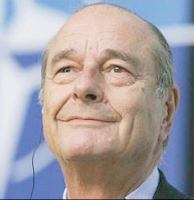
Apparently, Jacques Chirac was attacked by his "clinically depressed pet poodle." Let me be the first to say, this is hilarious; Chirac was rushed to the hospital because he was attacked by his own dog. Not that I find being attacked by a dog particularly funny, but a clinically depressed dog attacking the former President of France (who isn't a really nice guy anyway) is funny. So, Jacques, get better, and watch out for your dog (the quiet ones are the ones you have to be wary of).

Thursday, January 22, 2009

Islamists Make Presence Known in France

France, which in part opposed the war in Iraq due to its increasing Muslim population, is now facing further problems. Beyond all of those riots that happened a couple of years ago, that is.

“It’s good that the fighting has stopped, but that doesn’t mean we will forget,” said Enis Chabchoub, 29, a computer trainer who was watching the news with his parents, siblings and sister-in-law. “This war will be remembered, and not only in Gaza.”

In France, which is home to the largest Jewish and the largest Muslim communities in Western Europe, the conflict between Hamas and Israel has deeply inflamed passions over the past three weeks. The emotions, strongly expressed in demonstrations that drew tens of thousands of people to the streets, were one factor driving diplomatic efforts by French leaders, including President Nicolas Sarkozy, to achieve a lasting cease-fire.


Monday, December 1, 2008

Quote of the Day-- December 1, 2008

If I knew something that would serve my country but would harm mankind, I would never reveal it; for I am a citizen of humanity first and by necessity, and a citizen of France second, and only by accident.

--Charles de Montesquieu

Sunday, November 30, 2008

Quote of the Day-- November 30, 2008

When in 1966 Charles de Gaulle ordered France out of NATO and American troops off French soil, Secretary of State Dean Rusk asked him if that included the American soldiers lying dead in the cemeteries at Normandy and throughout France.

--Charles Krauthammer

Saturday, November 29, 2008

Quote of the Day-- November 29, 2008

France has more need of me than I have need of France.

--Napoleon Bonaparte